Quran OM 114 Surahs of Holy Quran in English Transliteration
The Holy Quran is the final and complete revelation from Allah to all of humanity (Quran OM), consisting of 114 Surahs filled with divine wisdom, moral guidance, and spiritual insight. Each Surah in the Quran OM carries a unique message that nurtures faith, ethics, and the understanding of life’s purpose. Through the teachings of the Quran-om, believers are guided toward righteousness, inner peace, and a deeper connection with their Creator. The overview below presents all 114 Surahs of the Quran in order, highlighting their main themes and profound significance.
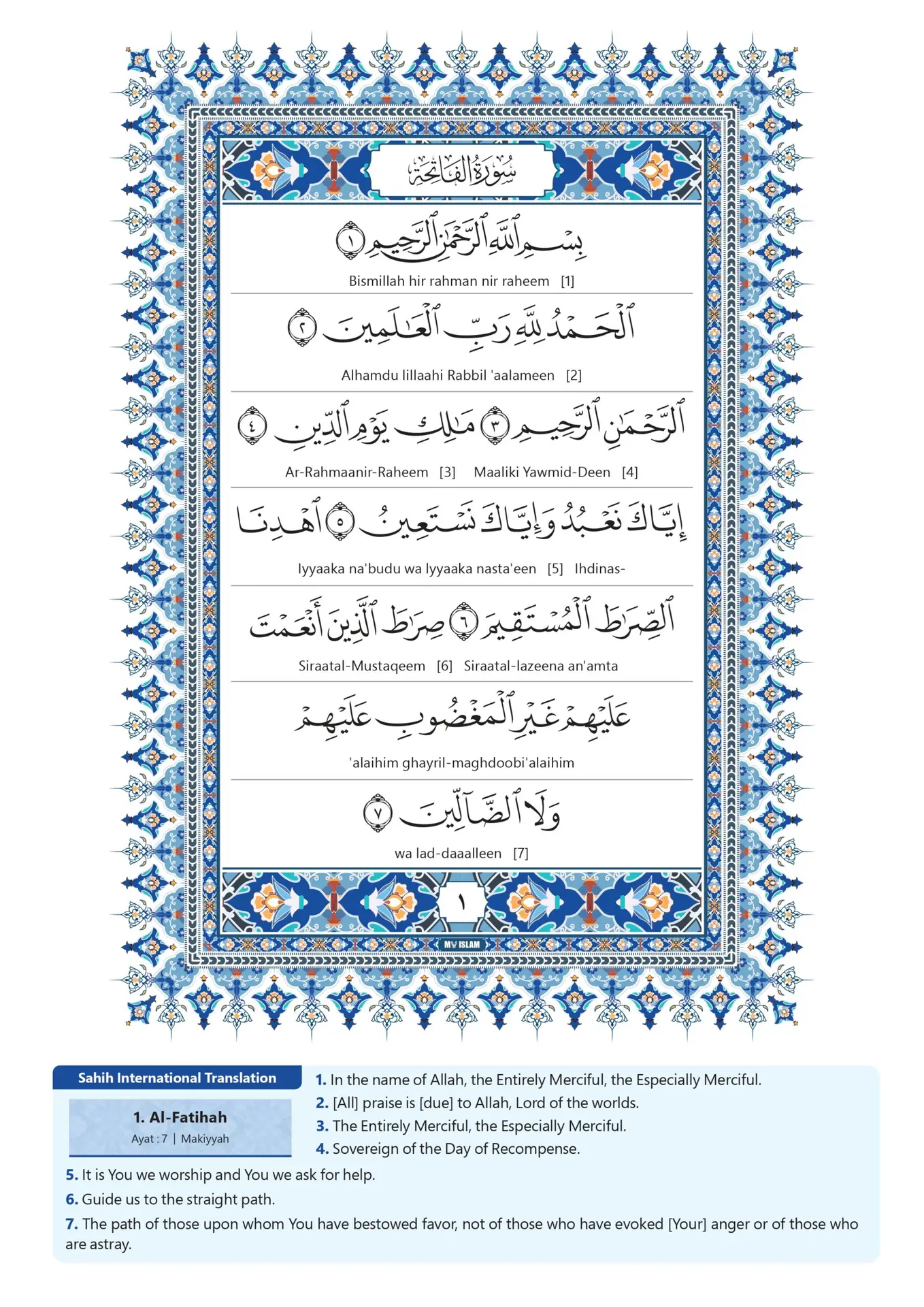
This is the first chapter of the Quran and is often referred to as the essence of the entire book. It consists of seven verses and serves as a prayer for guidance, mercy, and the straight path. Muslims recite it in every unit of prayer, making it the most frequently recited Surah.
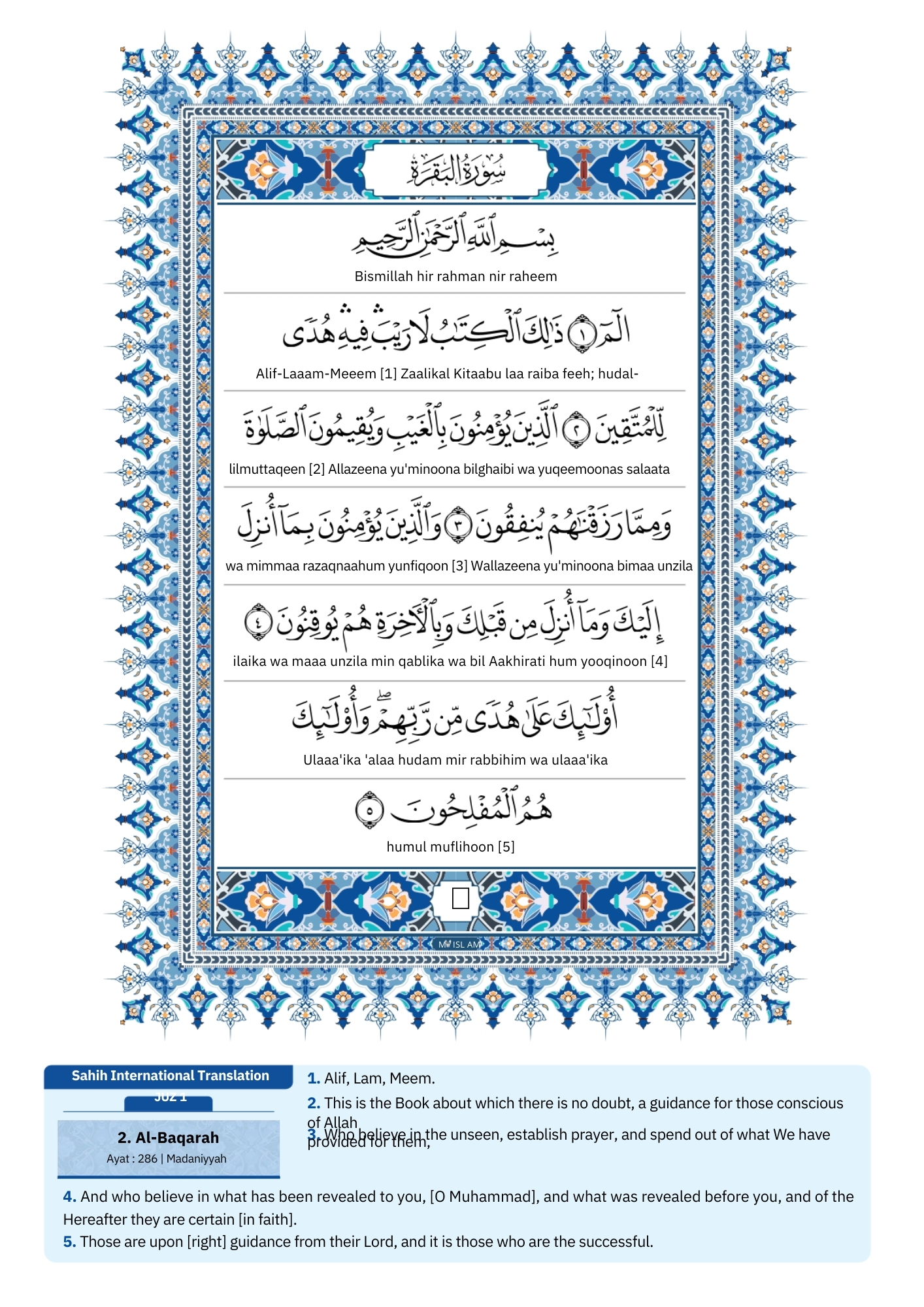
The longest Surah in the Quran, it covers a wide range of topics including faith, law, worship, and moral guidance. It emphasizes the importance of patience, prayer, and righteousness, and tells the stories of Adam, Moses, and other prophets.
This chapter focuses on the family of Imran, the parents of Mary (mother of Jesus), and discusses faith, sincerity, and steadfastness in times of trial. It encourages believers to hold firmly to the truth and trust in Allah.
It addresses the rights and responsibilities of women and family relations, inheritance laws, justice, and community ethics. It is a powerful chapter promoting social balance and moral equality.
This Surah discusses lawful and unlawful foods, keeping promises, and upholding justice. It also recounts stories of previous prophets, emphasizing obedience and faithfulness to divine commands.
It focuses on the concept of monotheism, rejecting idolatry and affirming Allah’s authority over all creation. The chapter calls for reflection on nature as a sign of divine power.
This chapter discusses the story of Adam and Satan, and several prophets including Noah, Hud, and Moses. It emphasizes the consequences of obedience and disobedience to Allah’s message.
It deals with the Battle of Badr and the principles of warfare in Islam. It highlights faith, courage, and unity among believers.
One of the few Surahs without “Bismillah” at the beginning, it focuses on repentance, sincerity, and distinguishing between true believers and hypocrites.
It tells the story of Prophet Jonah and other messengers, stressing patience, faith, and the certainty of divine justice.
Named after Prophet Hud, this Surah emphasizes steadfastness, faith, and trust in Allah despite adversity.
This chapter narrates the life of Prophet Joseph, serving as a timeless story of patience, forgiveness, and divine wisdom.
It discusses natural signs of Allah’s power and the contrast between believers and disbelievers.
It highlights the message of monotheism, the prayer of Prophet Abraham, and gratitude for divine blessings.
It contains stories of past nations who rejected divine guidance and were destroyed as a result.
This Surah praises Allah’s creation and blessings, calling humanity to reflect on gratitude and righteousness.
It recounts the miraculous journey of Prophet Muhammad and emphasizes moral and spiritual discipline.
It includes four major stories that teach lessons about faith, patience, and the trials of life.
Dedicated to Mary, the mother of Jesus, it celebrates purity, faith, and divine miracles.
It tells the story of Moses in depth and emphasizes divine mercy and guidance.
This Surah mentions many prophets, showing the unity of their message and their reliance on Allah.
It discusses the significance of pilgrimage, faith, and sacrifice for the sake of Allah.
It describes the qualities of true believers and the reward that awaits them in the Hereafter.
This Surah promotes modesty, chastity, and moral conduct, and it includes the famous “Verse of Light.”
It distinguishes between truth and falsehood and highlights the characteristics of true servants of Allah.
It recounts the stories of various prophets, showing how each faced rejection but remained steadfast.
It tells the story of Solomon, the Queen of Sheba, and the wonders of divine knowledge.
This chapter focuses on the story of Moses and the lesson of divine justice and patience.
It discusses the trials faced by believers and compares weak faith to a spider’s fragile web.
It prophesies the victory of the Romans and highlights Allah’s control over history.
Named after Luqman the Wise, it contains his advice on wisdom, gratitude, and righteousness.
It stresses the importance of revelation and the resurrection.
It recounts the Battle of the Trench and addresses social and ethical issues in the Muslim community.
It reminds believers of the blessings of Allah and the downfall of those who reject them.
It focuses on divine creation and the power of Allah as the Creator of all things.
Known as the “heart of the Quran,” it emphasizes the message of faith and resurrection.
It highlights the role of angels and recounts stories of prophets like Abraham and Jonah.
It discusses the story of Prophet David and the importance of repentance.
It emphasizes sincere worship and the distinction between believers and disbelievers.
It reminds people of Allah’s mercy and the call to repentance.
It describes the Quran as a clear message and discusses the fate of those who reject it.
It highlights unity, justice, and mutual consultation in the community.
It warns against pride and attachment to worldly luxuries.
It warns of the coming of divine punishment for disbelievers.
It focuses on reflection upon creation and the signs of Allah.
It mentions the people of ‘Ad and their rejection of Prophet Hud.
It discusses the struggle between belief and disbelief and the reward for the righteous.
It celebrates the Treaty of Hudaybiyyah and the promise of victory to the believers.
It teaches social manners, respect, and unity among believers.
It speaks about resurrection and accountability.
It calls for reflection on creation and warns of the consequences of disbelief.
It describes the rewards of the righteous and the punishment of the wicked.
It emphasizes that the Quran is divine revelation, not poetry or human speech.
It recounts the stories of destroyed nations as a warning to those who reject truth.
It beautifully describes the blessings of Allah and repeatedly asks, “Which of the favors of your Lord will you deny?”
It divides people into three groups on the Day of Judgment: the foremost, the righteous, and the deniers.
It highlights the balance between material life and spiritual faith.
It addresses social justice and family issues, focusing on fairness and truth.
It discusses unity among believers and the consequences of hypocrisy.
It speaks about loyalty, friendship, and faith during times of conflict.
It calls believers to remain steadfast and united in their mission.
It highlights the importance of the Friday prayer and obedience to Allah’s commands.
It exposes the traits of hypocrisy and warns against deceit.
It discusses accountability and the consequences of human choices.
It provides guidelines for divorce, fairness, and family responsibilities.
It warns against excess and emphasizes sincerity and repentance.
It encourages reflection on creation and the reality of life after death.
It discusses moral integrity and the story of the people of the garden.
It describes the events of the Day of Judgment in vivid detail.
It depicts scenes of the afterlife and the rewards of patience.
It recounts the story of Prophet Noah and his call to faith.
It describes the reaction of the Jinn to the message of the Quran.
It encourages night prayer and patience in delivering the message.
It commands the Prophet to rise and warn, highlighting early stages of revelation.
It describes resurrection and the final accountability of humanity.
It discusses human creation and the reward of the righteous.
It warns of the certainty of the Day of Judgment.
It describes the creation and the events of the Hereafter.
It speaks about death, resurrection, and the fate of Pharaoh.
It teaches humility and the importance of treating all people equally.
It depicts cosmic events of the end times.
It describes the signs of the Day of Judgment and human accountability.
It warns against dishonesty in trade and injustice.
It portrays scenes of the afterlife and judgment.
It honors steadfast believers who endured persecution.
It reminds humanity that all deeds are observed and recorded.
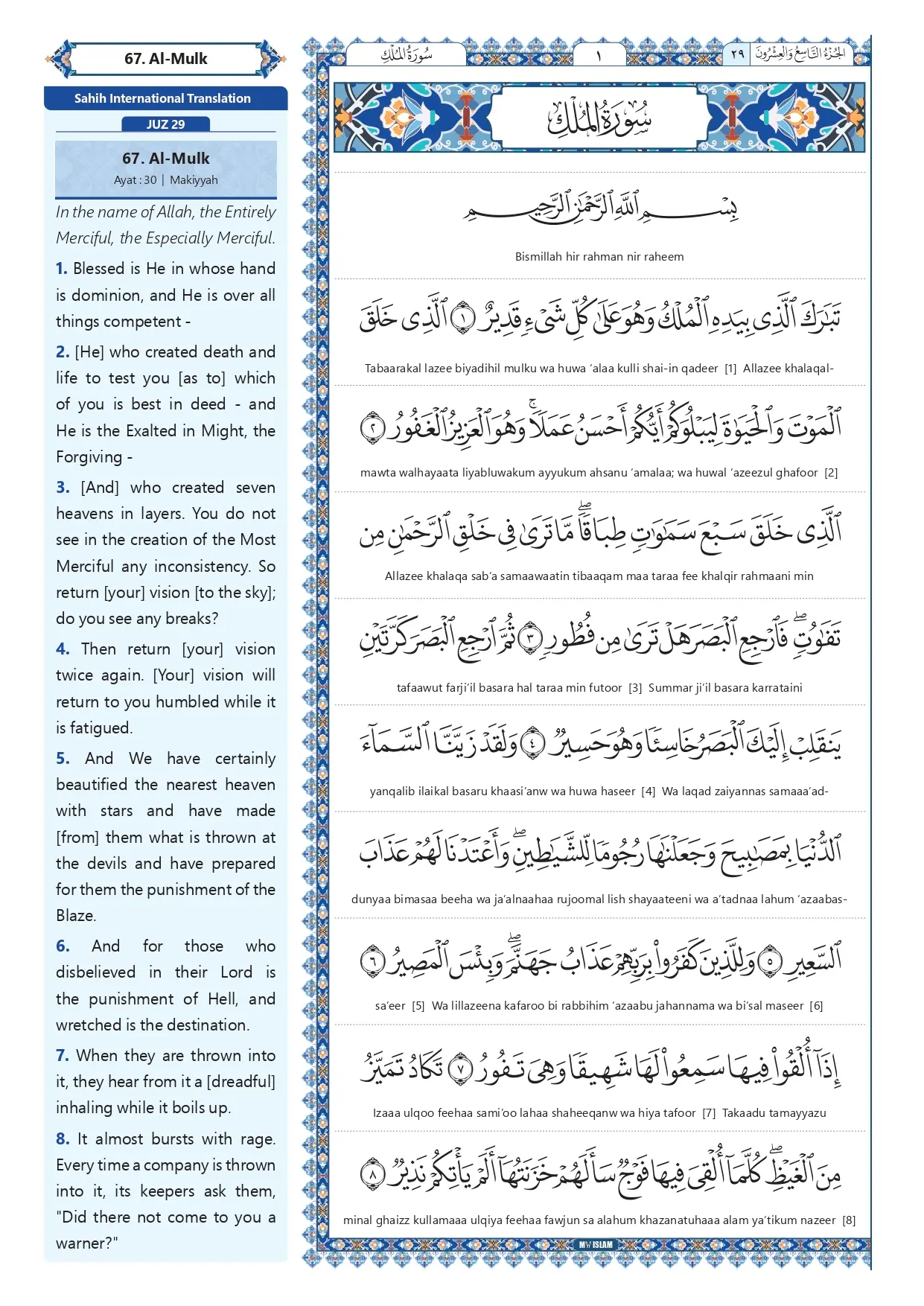
It praises the perfection of Allah’s creation and revelation.
It contrasts the reward of believers with the punishment of disbelievers.
It reflects on past nations and the destiny of the righteous soul.
It emphasizes effort, compassion, and the moral struggle of life.
It highlights the dual nature of the soul and the importance of purification.
It contrasts generosity and greed and explains the consequences of each.
It comforts the Prophet and reminds of Allah’s care and generosity.
It brings a message of hope, reminding that ease follows hardship.
It emphasizes human dignity and the consequences of disbelief.
It marks the first revelation, commanding the Prophet to read in the name of Allah.
It describes the Night of Power, when the Quran was first revealed.
It calls for sincere worship and righteousness.
It portrays the shaking of the earth on the Day of Judgment.
It warns against human ingratitude and attachment to wealth.
It vividly describes the Day of Judgment.
It warns against obsession with worldly possessions.
It stresses the importance of faith, good deeds, and patience.
It condemns arrogance and greed.
It recounts the destruction of the army of the elephant that tried to attack the Kaaba.
It reminds the tribe of Quraysh of Allah’s blessings and protection.
It criticizes hypocrisy and neglect of social responsibility.
It gives comfort and promises great reward to the Prophet.
It declares the separation between belief and disbelief.
It celebrates the victory of Islam and the completion of the Prophet’s mission.
It condemns Abu Lahab for his opposition to the Prophet.
It affirms the oneness of Allah in pure and simple terms.
It seeks refuge from all forms of evil.
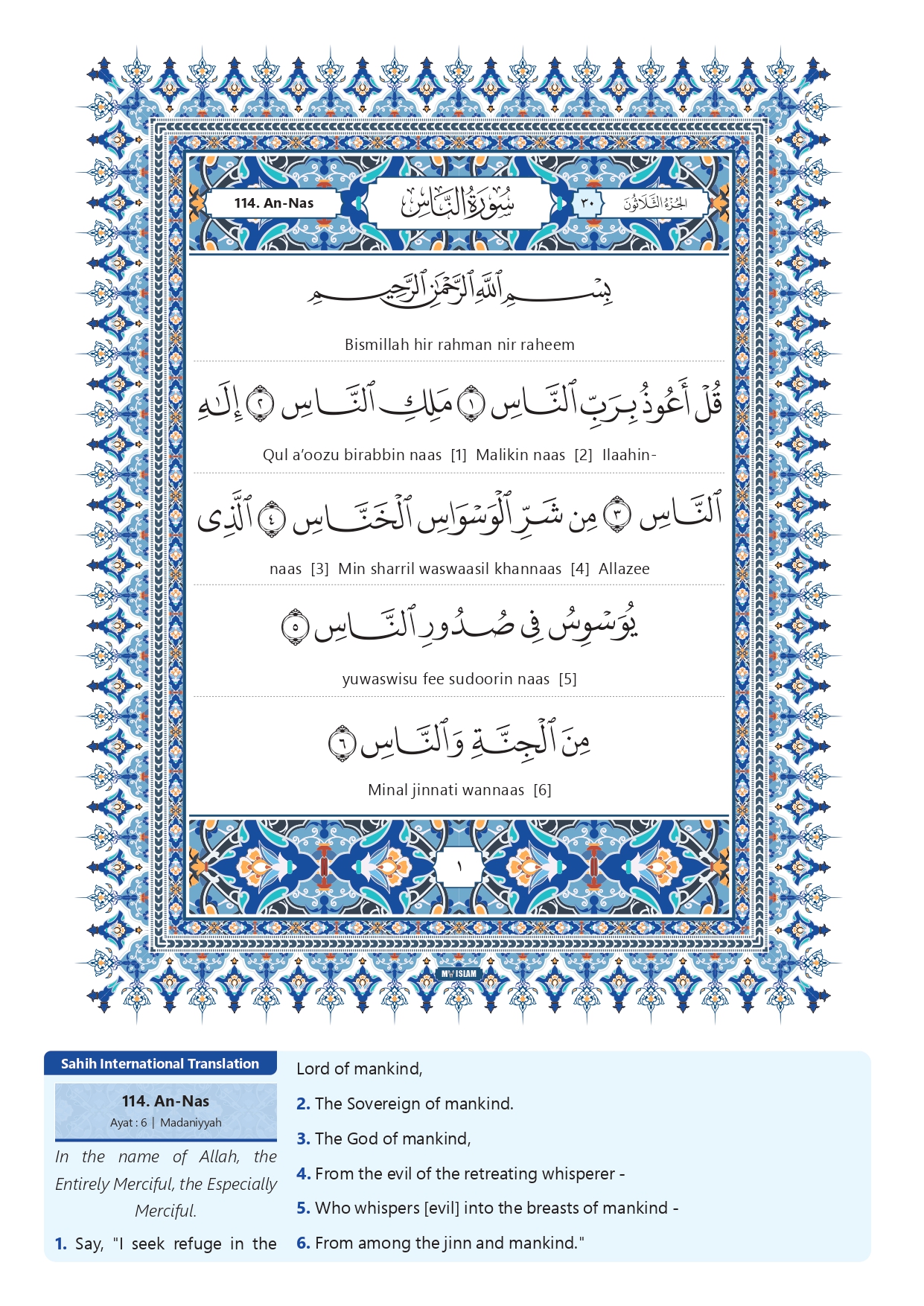
The final Surah of the Quran-OM, it seeks protection from the whispers of evil.